If you’ve ever found yourself puzzling over why one hearing aid works through a kind of mini loudspeaker and the other sends vibrations through your skull like you’ve landed in a sci-fi movie, you’re not the only one. The difference between air conduction and bone conduction is as mysterious to many people as the boiling point of water on Mount Everest. But when it comes to hearing – through your ears or through your bones – it actually makes surprising sense. In fact, it determines how you perceive sound and which solution best fits your situation.
In this blog, we’ll take you through both techniques, dive into hearing aids AND headphones, and explain exactly when which method is most appropriate. Sit back, grab a snack, and let us guide you through the world of sound.
What exactly is air conduction?
Air conduction is the way most people experience sound. Think: “normal” hearing. Sound travels as vibrations through the air, your auricle catches it, it goes neatly through your ear canal to your eardrum, which happily begins to vibrate along with it. Those vibrations are then transmitted to the ossicles (hammer, anvil and stirrup – yes, they really are called that), and eventually they end up in the cochlea, where the hairs in your inner ear convert it into electrical signals. Your brain then does the rest.
In other words, air conduction works through the outer and middle ear structures. That makes it super compatible with most hearing aids and headphones. But – and here comes the nuance – if something is wrong in that pathway, the whole system can start to falter.
When does air conduction not work as well?
Air conduction can cause problems when there is a blockage, inflammation or damage in the ear canal, eardrum or ossicles. For example:
– a severe ear infection
– fluid behind the eardrum
– a perforated eardrum
– a narrowed ear canal
– a congenital defect
In such cases, the sound simply doesn’t come through as well. Like trying to make a phone call under water: it can be done, but you don’t exactly understand each other smoothly. And that’s where bone conduction comes in.
What is bone conduction (and why does it sometimes feel magical)?
Bone conduction cleverly takes advantage of the fact that your skull itself is an excellent conductor of sound. Instead of sound entering your ear through the ear canal, vibrations are transmitted directly through the bones of the skull to the cochlea. So your outer ear and middle ear are skipped entirely; you kick right into the inner ear.
That means: even if your ear canal or eardrum doesn’t cooperate, you can still hear just fine via bone conduction. And yes, that feels a bit futuristic to many people – sound you hear without your ears actually being “open.
Why is leg guidance useful?
Bone conduction is ideal when air conduction presents a problem. For people with conductive hearing loss – where the ear canal or eardrum does not transmit sound properly – bone conduction can be a godsend. For example:
– ear canal problems
– chronic ear infections
– an eardrum that does not function properly
– people who cannot wear regular hearing aids
In addition, bone conduction is also used for certain types of hearing impairment where a conventional hearing aid is simply not practical.
But there is another surprising target group: athletes and people who like to continue to hear their surroundings. Because bone conduction is also gaining momentum in the headphone world.
Bone conduction and hearing aids: when do you choose what?
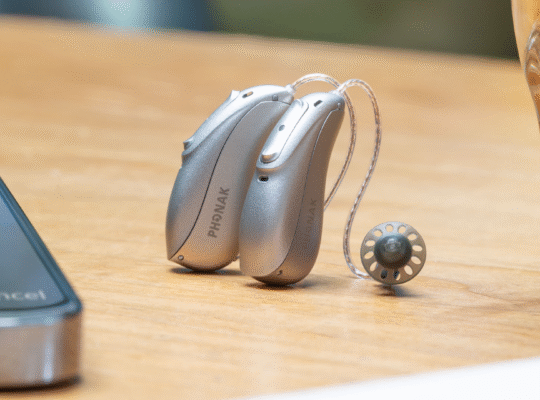
Air conduction-based hearing aids are by far the most common. This is because most hearing loss is in the inner ear (sensorineural loss), where the cochlea does not work as well – and air conduction works perfectly with it.
But with a conductive hearing loss, the situation is different. Hearing aids that use air conduction then have to work harder to get through the disrupted ear canal and middle ear structure. You can then offer a louder signal, but if the passage is poor, it’s still mopping up.
Bone conduction hearing aids (BAHAs and similar systems) skip that whole problem. They send vibrations directly to the inner ear, bypassing any obstacle. For many people, this is not only nicer, but also a lot more stable in sound quality.
Headphones: air conduction vs. bone conduction
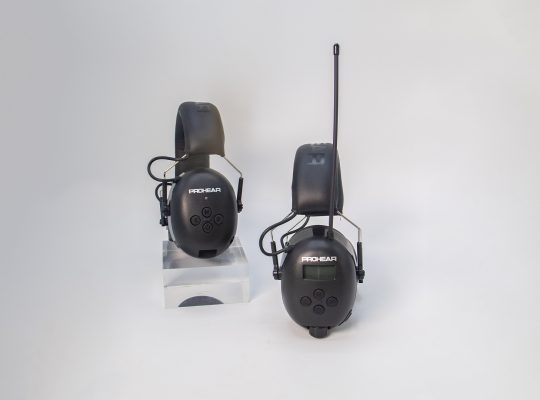
Within the world of headphones, too, you now have two camps: the old-school over-ear/on-ear with classic air conduction, and the hip bone conduits that vibrate your temples as if you were in a James Bond intro. But why choose one over the other?
Air conduction headphones
These are the headphones everyone knows. They seal your ears (partially) and send sound in through your ear canal. Advantages:
– rich, full sound quality
– often better bass
– ideal for music, movies and podcasts
But there are also disadvantages:
– they block out ambient noise (not always useful in traffic)
– prolonged use can put pressure on your ears
– they are less suitable for people with ear problems or ear canal irritations
Bone conduction headphones
You put these just in front of your ears, on your cheekbones. Your ears remain completely open. Benefits:
– you continue to hear ambient noise (safe during running and cycling)
– no pressure on your ear canal
– ideal for people with ear problems or ear canal sensitivity
Cons:
– sound quality less full (especially in bass)
– not everyone likes the vibrating feel
– they can “leak” a bit at high volumes (others sometimes hear along)
Real-world examples: which technology suits whom?
Let’s make it concrete for a moment. Suppose:
– You have an ear infection or narrow ear canal → Air conduction hearing aids are often a godsend.
– You have sensorineural hearing loss → Air conduction hearing aids are the best choice in the vast majority of cases.
– You want to listen to music while walking or biking → Air conduction headphones give you maximum safety.
– You like to watch movies or play games → Air conduction delivers the most rich experience.
In short:
Air conduction → best sound quality, most common
Bone conduction → best functionality when ears themselves are a problem
Why do these two systems coexist in the first place?
Because no two people have the same hearing, and no two uses are the same. One person wants crystal clear bass, another wants to be able to play sports without occluded ears, and yet another cannot tolerate a hearing aid in the ear canal.
It’s a bit like choosing between a bicycle and a car. Both get you from A to B, but not in the same situations. Leg guidance is the off-road vehicle that tackles mud roads; aerial guidance is the comfortable city car that does well on asphalt.
How do you know which option is best for you?
Get your hearing tested – that’s step one. After that, it depends on your hearing structure, lifestyle and personal preferences. So simple, and at the same time so indispensable.
At Horend Goed, we help people every day with just these kinds of choices. Not by turning a deaf ear to technical terms, but by looking at what works for you. Hearing aid, headphones, amplifier: each product has its own power.
Sound is more personal than you think
Whether vibrations reach your brain through air or bone, it’s all about one thing: that you experience sound the way you need it. Technology gets smarter, choices get bigger, but the goal remains the same – clear, comfortable and reliable hearing.
Leg guidance and air guidance are not competitors. They complement each other, and together they provide a solution for almost every situation.
And who knows: you may soon be listening to your favorite playlist through vibrating cheekbones, while your neighbor stays true to his old-school headphones. Both good. As long as you hear what you want to hear.