A night out: dancing at the club, singing at a concert or just socializing with friends at the pub. Music is often loud, you have to shout to understand each other, and when you get home you can still feel the bass thumping in your body. But sometimes you also notice something else: a high pitched beep or a soft buzzing in your ears. We call that tinnitus, or in medical terms tinnitus .
Everyone suffers from it from time to time after a night out, but when is it harmless and when should you be concerned? In this blog, we dive deep into tinnitus: the causes, the dangers and, most importantly, what you can do about it.
What is tinnitus anyway?
Tinnitus is a sound you perceive without an external sound source. It can sound like:
- A high-pitched beep
- A buzzing sound
- Hissing, rustling or whistling
This sound occurs because the cilia in your inner ear (which pick up and transmit sound waves to your brain) become temporarily overexcited or even damaged. After a night out with loud music, they can still vibrate afterward or transmit wrong signals, causing you to hear a beep that isn’t actually there.
Why do you get tinnitus after a night out?
During a concert or night out, your hearing is exposed to sound levels of 90 to 110 decibels or even higher. By comparison:
- A normal conversation is around 60 decibels
- A vacuum cleaner around 70 decibels
- A club or festival can easily exceed 100 decibels
At such noise levels, your ears take a big hit. The cilia in your inner ear become overloaded and send false signals. This manifests itself in that annoying beep.
When is tinnitus harmless?
The good news: in many cases, the squeak is temporary. It often disappears within a few hours to a maximum of 24 hours. We call this temporary hearing loss or temporary tinnitus. Your ears simply need rest to recover.
You usually don’t have to worry if:
- The squeak disappears after a few hours or days
- Buzzing does not recur daily
- You have no other complaints such as dizziness or hearing loss
When should you worry?
Sometimes tinnitus is a warning sign that your hearing is suffering permanent damage. Especially if you often go to loud parties, the temporary ringing may eventually become permanent. Pay extra close attention if:
- The beep persists for more than a week
- You experience hearing loss in addition to tinnitus
- Buzzing increasingly recurs after going out
- The sound is not just a squeak, but also hums, taps or whistles
- You have difficulty following conversations, especially in noisy environments
In those cases, it is wise to have your hearing tested by an audiologist or family doctor.
How dangerous is tinnitus?
One night out with a squeak the next day does not have to mean immediate permanent damage. But: the more often your ears are exposed to loud music, the more likely the tinnitus will become chronic. Chronic tinnitus can be enormously drastic. People experience:
- Concentration problems
- Sleep problems
- Stress and fatigue
- Reduced quality of life
So it is not a problem to ignore. Your hearing is fragile and damaged cilia in the ear do not recover.
What can you do if you have tinnitus after a night out?
1. Give your ears a rest
Avoid loud noises the day(s) after. Don’t turn music up too loud and give your hearing a chance to recover.
2. Get enough sleep
Rest is important. During sleep, your brain and senses have a chance to recover.
3. Avoid caffeine and alcohol
These drugs can worsen tinnitus because they affect blood flow and nerve stimulation in your ear.
4. Find distractions
Don’t pay constant attention to the beep. Put on quiet background music or listen to white noise , so that the hiss is less noticeable.
5. Visit a professional
If symptoms last longer or get worse, get your hearing tested. The earlier hearing damage is noticed, the better you can prevent it from getting worse.
How can you prevent tinnitus during a night out?
Use earplugs
The very best way to prevent tinnitus is simple: earplugs with music filters. These muffle the sound by an average of 15 to 20 decibels, without making the music sound indistinct. You can still enjoy your favorite band or DJ, but your hearing won’t take such a hit.
-
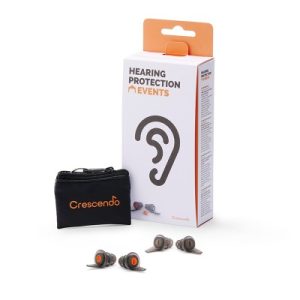 Crescendo Events€27,99
 -
 Pluggerz Music Uni-Fit earplugs.€15,95
 -
Product on sale
 Noizezz PREMIUM Music – MediumOriginal price was: €49,95.€39,95Current price is: €39,95.
 -
 Phonak Serenity Choice Music – music earbuds€64,99
Choose a good spot in the room
Don’t stand right in front of the speakers. The closer to the sound source, the higher the strain on your ears.
Take listening breaks
Walk occasionally to a quieter room. Just 10 minutes of rest can help your ears tremendously.
Limit the duration
The longer you are exposed to loud music, the greater the chance of damage. Try not to stand next to speakers from start to finish.
Keep an eye on the volume of your headphones
Not only while going out, but also after. On the train back home, don’t turn your music up too loud, because your ears just need a rest.
Is tinnitus always due to loud music?
No. Although going out and festivals are a common cause, tinnitus can also be caused by:
- Ear infections
- Medication
- Stress and tension
- High blood pressure
- Excessive caffeine or alcohol consumption
- Hearing loss due to old age
Therefore, if symptoms persist, it is always important to investigate further.
Enjoy, but be careful
A squeak or buzz in your ear after a night out is a sign that your hearing has had enough for a while. It usually goes away on its own, but it is a warning sign. If you experience this regularly and do nothing to protect your ears, it can lead to permanent tinnitus or hearing loss.
Want to keep enjoying concerts, festivals and nights out? Then make sure you always carry earplugs with music filter, take breaks and give your hearing the rest it needs.
So you can dance, sing and party carefree – without an irritating beep for days to come.