We get our eyes checked regularly, we go to the dentist for a periodic checkup and sometimes even an annual health checkup. But our hearing? We often forget about that. While your hearing is just as important a sense as your sight or your teeth. It allows you to communicate, enjoy music, perceive traffic noise and simply stay connected to the world around you. Yet many people wait until they really experience symptoms, whereas a hearing test can provide valuable information at an early stage.
In this blog, we dive into the question: how often should you actually get your hearing tested?
Why is a hearing test important?
Your hearing doesn’t usually deteriorate overnight. It’s a gradual process that you often don’t notice until the damage is already worse. Many people discover their hearing loss by having to ask, “What did you say?” more and more often or by turning the television up to a higher volume.
A hearing test helps to detect this process earlier. As with glasses, you can reduce many symptoms with an aid or fitting. Consider a hearing aid, hearing protection or simply being more aware of noise.
In addition, there are other reasons why hearing tests are important:
- Prevention: early detection prevents you from walking around with hearing loss unnecessarily.
- Communication: you stay better in touch with family, friends and colleagues.
- Safety: hearing well in traffic or at work is essential.
- Health: Hearing loss has been associated with cognitive decline and social isolation.
How often should you take a hearing test?
There is no one standard answer that applies to everyone. How often you should have your hearing tested depends on your age, lifestyle, occupation and medical background. Still, there are guidelines and advice to give you guidance.
1. Until age 40: only in case of complaints or risks
If you are young and healthy, there is little chance that your hearing will deteriorate. At this stage, a test is especially necessary if you:
- Regular exposure to loud music(concerts, festivals, headphones).
- Works in noisy environments (construction, industrial, hospitality).
- Taking medications that can affect your hearing.
A one-time hearing test around age 25 or 30 can’t hurt: that way you have a baseline measurement you can fall back on later.
2. Between 40 and 50 years of age: every 5 years
From the age of 40, your hearing often begins to change unnoticed. You hear high tones less well, conversations in a crowded café become more difficult to follow. That is why it is wise to have your hearing checked every five years.
3. From 50 years of age: every 3 years
Hearing loss becomes more common as you age. Starting at age 50, a hearing test is recommended every three years. This detects changes early and can prevent you from falling behind with aids.
4. From age 65: annually
In seniors, hearing loss is more rapid and the consequences are greater. Not hearing well can lead to misunderstandings, loneliness and even an increased risk of dementia. Therefore, the advice is: starting at age 65, have your hearing tested annually, just as you have your eyes and blood pressure checked more often.
Signs that you should test earlier
Besides age, there are signs that indicate it’s best to have your hearing checked right away, regardless of your age. Pay particular attention to these situations:
- You have difficulty following conversations, especially in noisy environments.
- You have to turn up the TV or radio louder than others are comfortable with.
- You suffer from a ringing or ringing in your ears(tinnitus).
- You often feel that people are mumbling.
- You feel tired more quickly after a day full of conversations.
Do you recognize yourself in this? Then it’s time for a test, even if you’re only 25 or 35.
Where can you get your hearing tested?
There are several places you can go for a hearing test:
- At the audicien: Horend Goed offers a free, no-obligation hearing test. You can easily make an appointment online for this.
- At the ENT doctor or audiology center: this is where you can go for extensive examinations, especially for complex complaints.
- Online hearing tests: useful as a first check, but less reliable. Consider this a first step, not a replacement for a professional test.
Hearing tests for specific groups
Some people do well to test their hearing more often than average.
- Musicians and DJs: intensive contact with loud music makes regular monitoring crucial.
- Construction workers and factory workers: often work in noise and are at increased risk.
- Children with ear problems: recurrent ear infections or tubes can affect hearing.
- People taking medications that are ototoxic: for example, certain chemotherapy or antibiotics.
What happens during a hearing test?
A hearing test is simple and painless. You get headphones on and hear beeps of different heights and volumes. You indicate whether you hear the sound. This allows an audiologist to determine exactly where your hearing loss is and how severe it is.
Sometimes it also looks at your speech intelligibility: how well can you follow words or phrases in silence and in noise? This test shows how your hearing functions in everyday life.
What if hearing loss is diagnosed?
Don’t panic: Hearing loss doesn’t mean you immediately have bad hearing or can’t do anything. Often there are many solutions:
- Hearing protection: prevent your hearing from deteriorating further.
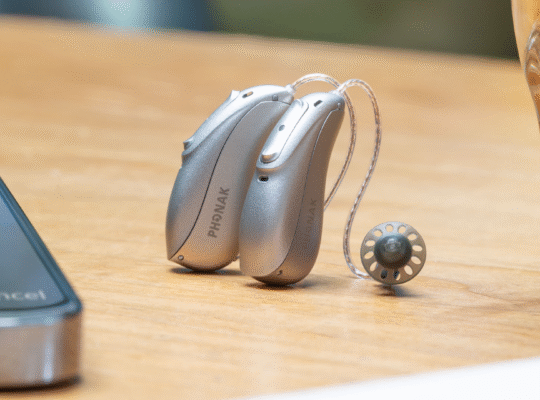
- Hearing aids: modern devices are small, smart and help you hear the world sharply again.
- Assistive devices: such as teleloops or amplifiers at the telephone.
- Adjustments in your environment: quieter meeting rooms, clear communication agreements.
Conclusion
Your hearing is an indispensable sense that helps you stay connected to the world. Yet we often forget to check it as much as our eyes or teeth. The advice?
- Up to 40 years of age: only in case of complaints or risks.
- 40-50 years: every 5 years.
- 50-65 years: every 3 years.
- From age 65: annually.
And do you notice symptoms in between? Then it’s always smart to test earlier.
Don’t think of a hearing test as something exciting, but as a way to keep a grip on your health. Because the earlier you detect changes, the better you can address them.