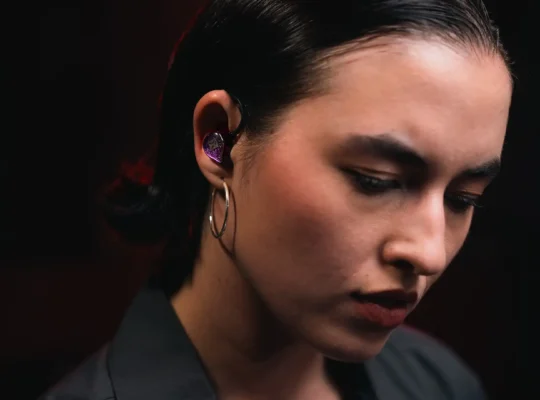
Headphones are almost as natural as a smartphone these days. Kids use them to listen to music, watch movies, take online classes and even play games. But where adults often know (or at least should know) their own limits, children depend on our guidance. This is because a child’s hearing is much more sensitive than an adult’s. The wrong headphones, too loud a volume or too long a listening time can cause permanent hearing damage. Therefore, it is important to know what to look for when choosing headphones for your child.
Children’s hearing is more vulnerable
Children are born with excellent hearing. In fact, they often hear better than adults, simply because their ears have not yet been exposed to years of noise. But that very sensitivity makes their hearing vulnerable. Sounds that are too loud can damage the hair cells in the inner ear, and they do not repair themselves. So hearing damage at a young age is irreversible and can have major consequences later in life, such as impaired hearing, difficulty concentrating and even tinnitus.
The problem is that hearing damage usually occurs gradually. You don’t notice it until it’s already too late. That’s why prevention is so important, especially with children who are often using headphones.
Volume: the biggest culprit
One of the biggest risks with headphones is volume. Many people do not know that 85 decibels is the maximum safe volume for long-term exposure. Anything above that, especially for hours of listening sessions, can be harmful. By comparison, 85 decibels is about the sound of heavy city traffic. Many headphones, especially for adults, can easily reach 100 decibels or more. That may not seem that much louder, but every additional 3 decibels means a doubling of sound intensity.
For children, therefore, it is smart to choose headphones with volume limits. These are often set to a maximum of 85 decibels. This prevents your child from listening too loudly unnoticed.
Beware of volume limiters that don’t work
Not all volume-limiting headphones are equally reliable. Some models advertise a safe limit, but in practice the volume turns out to be higher. Cheap models in particular can disappoint in this regard. Reading an independent test or reviews can help determine whether the limiter really works. Also note that some devices, such as certain phones or tablets, can still drive headphones louder.
Comfort and fit are crucial
Children have smaller heads and ears, so adult headphones are often too big or heavy. This is not only uncomfortable, but can also cause the headphones to not seal properly. With a poor fit, you hear ambient noise better, which automatically turns up the volume.
So choose headphones designed specifically for kids: lightweight, adjustable and with soft ear cushions. A good fit provides more comfort and less temptation to turn up the sound too loud.
Over-ear, on-ear or in-ear?
There are different types of headphones, and each type has advantages and disadvantages.
- Over-ear headphones (ear cups that completely cover the ear) often seal well and provide full sound. They are comfortable for longer listening sessions, but can be a bit large for young children.
- On-ear headphones (those that rest on the ear) are often lighter and more compact, but do not seal as well, so the volume goes up faster.
- In-ear earbuds are small and easy to carry, but are generally not recommended for young children because they sit directly in the ear canal and can be too loud more quickly.
Over-ear or light on-ear headphones with volume limitation are usually recommended for children.
Limiting listening time
Even with a safe volume limit, it is important to limit listening time. The WHO (World Health Organization) recommends the 60/60 rule: a maximum of 60 minutes of listening at a time, at no more than 60% of volume. After that hour, a break is important so the ears can recover.
It is helpful to incorporate set times when children take off their headphones for a while. For example, while eating, playing outside or just chatting. This prevents listening from becoming a constant background activity.
The danger of environmental noise
A common problem is that children use their headphones in noisy environments, such as in the car or on the train. Because of the background noise, they automatically turn up the volume. Noise-cancelling headphones can be a solution in such a situation, as they reduce distracting noise and the volume can therefore remain lower. Please note that active noise-cancelling is usually not found in children’s models, but some over-ear variants already offer good passive attenuation.
Wireless or wired?
Both options have their advantages. Wireless headphones (bluetooth) give children more freedom of movement and prevent them from tripping over a cable. However, they do need to be charged, and in some models the maximum volume via bluetooth can be higher than via a cable.
You run that risk less with wired headphones, but children can get tangled in the cable or pull on it. Some children’s headphones have a detachable cable, which is safer.
Joint listening is also possible
Some headphones for children have a built-in audio splitter, allowing multiple headphones to be connected together. This allows children to listen to music or watch the same movie together without the volume having to be too high for one of them.
Teach children hearing awareness
Ultimately, it’s not just a matter of buying the right headphones; it’s also a matter of education. Explain to children why it is important to be careful with their ears. For example, you can compare it to sunburn: you don’t feel the danger right away, but the damage can be great later. If children understand why they shouldn’t listen too loudly, they are more likely to pay attention themselves.
You can create a few simple rules together, such as:
- Never turn up the volume higher than half.
- Do not listen for more than an hour without a break.
- Do not use headphones if you can no longer hear someone talking.
Recognizing hearing problems early
Watch for signs that your child may already be suffering from hearing problems. Examples include:
- Often asking to repeat things
- Talking louder than usual
- Complaining about a squeak in the ear
- Having difficulty concentrating in school
If you notice this, it is wise to have a hearing test done at an audiologist (that’s us!) or ENT specialist.
In conclusion
Headphones can be a great way for children to enjoy music, stories or educational videos. But as with many things, moderation and proper precautions apply. By choosing a good model with volume control, paying attention to listening time and comfort, and making your child aware of hearing protection, you are laying the foundation for healthy ears – now and in the future.