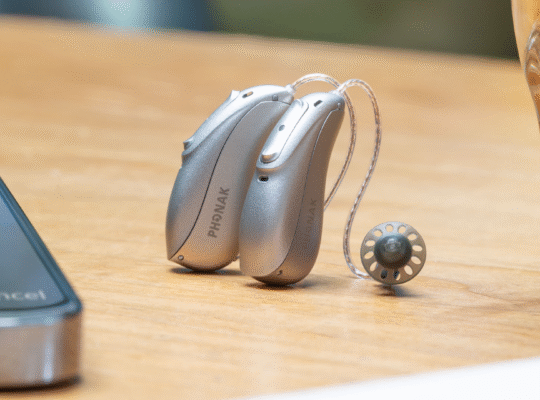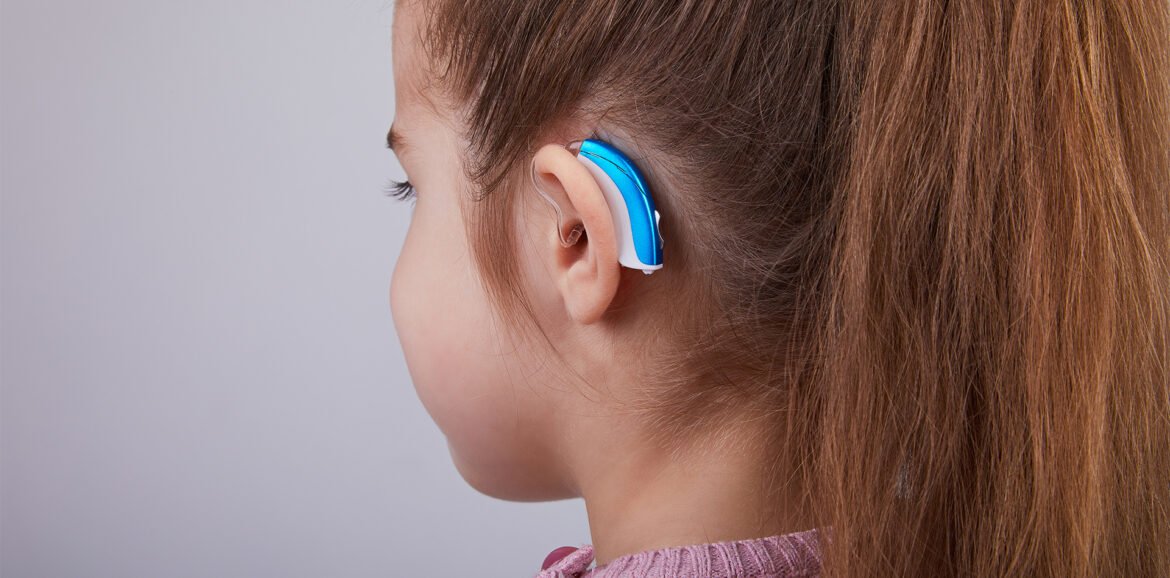
A hearing aid in a child often raises more questions than in an adult. Not only technically, but especially emotionally. Because hearing plays a key role in how a child learns to talk, learns to listen, connect and develop. When that hearing does not work optimally, it has an impact. Fortunately, hearing aids for children today are smart, small, robust and, most importantly, tailored to growing ears and a growing brain.
A hearing aid is not a “last resort” for a child, but an aid that enables development. Think of it as glasses for the ears. Only one that can take a beating, withstand playgrounds, school days and life in general.
Why hearing is so important in children
Children learn by listening. Speech, language, intonation, emotions, social cues: it all comes in through hearing. Even slight hearing loss can affect:
- Speech and language development
- Concentration and learning performance
- Social interaction
- Self-confidence
Whereas an adult can often “fill in” missing bits of sound based on experience, a child cannot yet do so. What is not heard is simply not learned.
When does a child get a hearing aid?
Hearing aids for children are used for various forms of hearing loss:
- Congenital hearing loss
- Hearing loss due to middle ear problems
- Hearing loss after illness or infections
- Progressive hearing loss
In the Netherlands, hearing loss is often detected early through the hearing screening of babies. This is not an unnecessary luxury. The earlier hearing loss is recognized, the better guidance and support can start.
How do hearing aids for children differ from those for adults?
Hearing aids for children are not “little adult models.” They are designed specifically for children’s ears and children’s lives.
Key differences:
- They grow with the ear
- They are extra sturdy and resistant to drops
- They have child-friendly settings
- They are compatible with tools at school
- They are easily controlled by parents
In addition, safety is important. Children’s hearing aids often have battery door locks and clear signal functions.
Behind-the-ear hearing aids in children
Most children wear behind-the-ear hearing aids. Not because it is the only option, but because it is practically the best choice.
Advantages:
- Suitable for virtually all forms of hearing loss
- Easy to adjust as it grows
- Robust and reliable
- Combines well with custom earpieces
The earmold adjusts as the ear grows. This may sound cumbersome, but it ensures that the hearing aid always stays in place and functions optimally.
Hearing aids and school
At school, it becomes clear how important good hearing is. Instructions, explanations, questions from classmates, tests such as the CITO test: everything revolves around intelligibility.
Many pediatric hearing aids can be paired with:
- Teacher microphone systems
- FM or digital wireless systems
- Tablets or computers
This allows the teacher’s voice to come in directly and clearly, without background noise interfering. This makes a huge difference in listening effort and fatigue.
Playing, playing sports and exercising with a hearing aid
Children move. A lot. And without a pause button. A hearing aid should be able to handle that.
Modern hearing aids for children are:
- Shockproof
- Resistant to sweat
- Designed to stay firmly in place
Some activities require additional protection, such as hearing protection for loud noises or special solutions for water sports. This is because hearing aids and water do not automatically go well together.
Water, hearing and hearing aids
Children who wear hearing aids can enjoy swimming and water sports just as much. But with the right precautions. Technically speaking, a child’s hearing aid may be waterproof, but under water you simply can’t hear anything and the earmolds seal up. Moreover, they get lost easily.
Out there, water in the ear can lead to ear infections, swimmer’s ear or, with prolonged exposure, even surfer’s ear. Especially for children with ear problems or tubes, protection is important.
Swimming plugs, both universal and custom, can play a role in this. They protect the ear from water and help prevent problems, allowing the hearing aid to come off safely while swimming.
Bonus tip
Regardless of ear problems and age, the way to communicate in the water is the AquaCom communication set. This system works on the basis of bone conduction and is ideal during swim training, water sports such as water polo and, of course, swimming lessons!
You can choose the number of transmitters and receivers, so the possibilities are endless.
-
Product on sale
 Aquacom Communication Set for Swimmers and Trainers – Waterproof Leg Guidance TechnologyPrice range: €99,00 through €2.141,00
The social aspect of a hearing aid
For many parents, this may be the most exciting part. How does the environment react? Will my child be treated differently?
Children are often surprisingly down-to-earth. Especially if they wear hearing aids from a young age, it’s just part of them. Today, hearing aids come in a variety of colors and styles. Sometimes they stand out, sometimes they don’t. Either is fine, as long as the child is comfortable with them.
Good counseling helps tremendously in this regard. Explaining it at school, to friends and family makes the subject normal. And normal is exactly what it is allowed to be.
Maintenance and monitoring
A child’s hearing aid requires attention. Not excessively, but consistently.
Consider:
- Daily monitoring by parents
- Regular cleaning
- Checking the earpiece
- Periodic adjustment at the Audiological Center (from 18 years of age and up, this may be done at the audiologist)
Children grow, their hearing may change and their listening environment becomes more complex. Regular checkups ensure that the hearing aid continues to do what it is supposed to do.
Hearing aids and hearing protection: a combination
An important point often forgotten: a hearing aid does not protect hearing from loud noises. In fact, noise may require additional protection.
In high noise situations, such as fireworks, events or loud music, hearing protection is essential. Also for children with hearing aids. Sometimes that means: hearing aids off and hearing protection in.
Hearing well also means protecting well.
The role of parents
As a parent, you are not an audiologist, but you play a key role. By being alert to signs, asking questions and supporting your child, you make a world of difference.
Not everything has to be perfect. What matters is that a child can participate, learn and develop without hearing becoming an unnecessary barrier.
A tool, not a limitation
Hearing aids for children are not a limitation, but rather an aid to prevent limitations. They open up the world of language, communication and contact. And that is exactly what a child needs to grow.
Hearing well is not a luxury. It is a basic requirement. And with the right hearing aids, guidance and protection, that foundation is solid.