
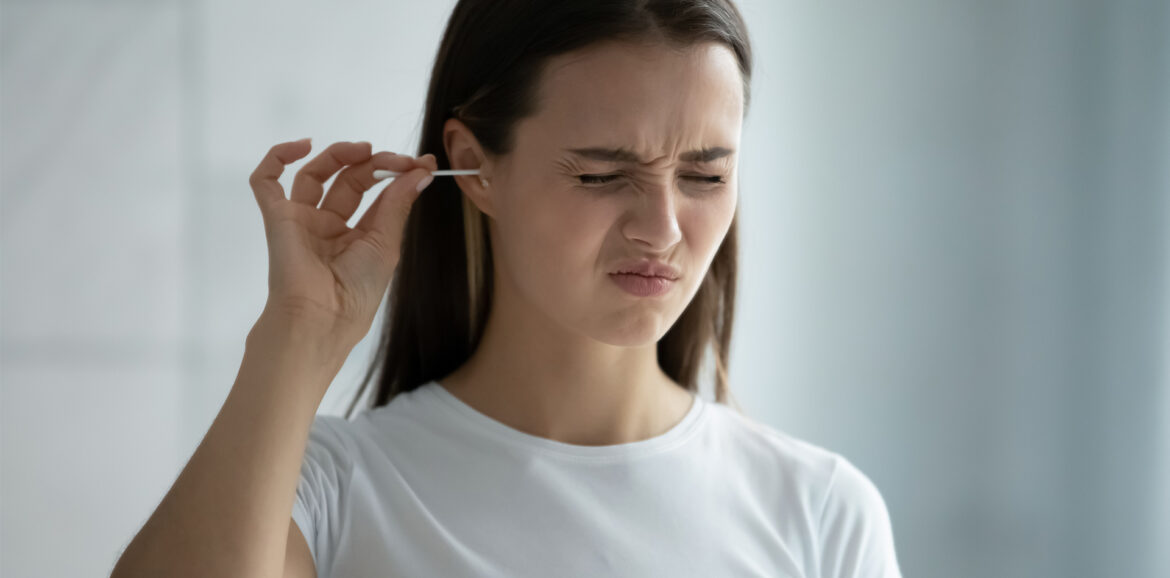
We all do it from time to time. An itch in your ear: grab a cotton swab, a pen, your glasses or a hairpin – and hup, just a quick scratch or “clean”. But your ears are not a bulletin board you can just stick things in. In fact, they are one of the most sensitive and vulnerable parts of your body. One wrong move, and you damage the eardrum or the skin in the ear canal. And that can lead to inflammation, pain or even hearing loss.
In this blog, we list 10 everyday things you should never put in your ears – no matter how innocent they may seem. And, of course, we give you a safe alternative: the Bebird T15, a smart ear cleaner with camera specially designed to keep your ears clean in a safe way.
1. Cotton swabs
We kick off with the classic. Cotton swabs seem made for ears – after all, they’re often in the bathroom – but that’s a persistent misconception. In reality, you push wax deeper into your ear canal, allowing it to accumulate and form a plug.
Such a wax plug can lead to pressure on the eardrum, worse hearing, dizziness or even tinnitus. And if you go too deep, you can also perforate your eardrum.
So cotton swabs are not a tool, but a risk. Feel free to use them to correct makeup or treat minor wounds, but not in your ears.
2. Glasses legs
Have you ever thought, “Just scratching the leg of my glasses”? You’re not the only one – but it’s a very bad idea. The hard, smooth plastic can easily tear open the delicate skin of your ear canal.
You often don’t notice those little wounds right away, but they can become inflamed as soon as water or bacteria get to them. A small itch then ends up in a painful ear infection. So let your glasses do what they are meant to do: see better, not scratch.
3. Pens
Pens, pencils, paper clips … you name it. They are always within reach, and so they are tempting to briefly use as “ear candy.” But metal or plastic pointed objects can quickly cause damage.
Your eardrum is wafer thin – less than half a millimeter! One wrong move, and you make a hole in it. Plus, of course, pens and paper clips are not sterile, which increases the risk of infection.
4. Hairpins
Another classic: the hairpin. Especially among women (and mothers of small children) you see it often. Hairpins are thin, sturdy and just long enough to “quickly” tackle an earwax plug. But they can damage the ear canal or actually push the wax deeper.
Plus, they can break off or get stuck – yes, it really does happen more often than you think. So: keep that pin in your hair, not in your ear.
5. Keys
You know the drill: you just got home, your ear itches, and you happen to have your keys in your hand. Just a quick … wrong! Keys are often dirty, sharp and anything but sterile. Just one scratch on the inside of your ear can lead to a painful infection.
Plus, keys are full of bacteria – after all, they’ve been everywhere with you. So even though it seems harmless, it’s one of the dirtiest things you can do to your ears.
6. Your fingers
Perhaps the most commonly used “tool”: your own fingers. Just scratching, just feeling for earwax. The problem is that your fingers (even if they seem clean) always contain bacteria, and your nails can damage the skin.
In addition, you often unconsciously push earwax further in with your finger. And that causes your ears to be less able to perform their natural cleaning function. This is because your ears have a clever self-cleaning system: the earwax slowly transports itself outside.
In short: staying off is better.
7. Matches or toothpicks
Yes, people really do this. A match or toothpick seems like just the right shape to pry something loose for a moment. But it’s literally playing with fire. Wood can splinter, break or be sharp. Plus, of course, it’s not sterile.
A small wound in your ear is not only painful, but also a perfect breeding ground for bacteria. Even though you can easily prevent it by simply not using sticks made of wood.
8. Earplugs (if you don’t clean them).
Earbuds are not necessarily “dangerous,” but they are if you use them dirty. In-ear earplugs quickly collect bacteria, skin grease and dirt – especially if you wear them daily. That dirt then enters your ear canal, where it can cause irritation or inflammation.
So clean your earplugs regularly with a soft cloth and some alcohol-free cleaner. And if you share them with someone else (which is not recommended anyway), make sure they are really well disinfected.
9. Cotton balls or tissues
They seem soft and harmless, but cotton balls and tissues can also leave fibers in your ear. Those tiny fluffs get stuck in the earwax and can start to irritate or even cause inflammation.
In addition, again, you will only push earwax further in. So prefer to leave your cotton balls in the makeup box, not in your ear.
10. Home remedies
There are countless “natural tips” circulating online for cleaning your ears – from hydrogen peroxide to olive oil and even candle wax (yep, ear candling).
These agents may seem harmless, but they can dry out the ear, burn it or actually harden the earwax. And candle wax? That can literally drip onto your skin or eardrum. So not a good idea.
If you want to safely and effectively remove earwax, prefer to choose a modern alternative designed specifically for that purpose.
The safe alternative: the Bebird T15
If you do want to clean your ears responsibly, the Bebird T15 is a godsend. This innovative device combines technology and safety in one.
The Bebird T15 is an ear cleaner with a built-in camera that allows you to see exactly what you are doing on your smartphone. This way, you don’t have to work by feel (as you would with a cotton swab), but can remove earwax in a targeted and gentle manner.
The silicone tips are soft and flexible, so you won’t damage the sensitive tissue in your ear canal. In addition, the Bebird has built-in temperature control, so the device is always pleasant to the touch and you don’t risk burning or irritation.
What makes the Bebird T15 truly special is that it is safe, reusable and durable. You no longer have to use disposable sticks, and you keep your ears clean without damaging them.
-
Product on sale
 Sennheiser RR Flex (kopie)Original price was: €131,99.€119,99Current price is: €119,99.
 -
Product on sale
 ReSound Multi Mic (kopie)Original price was: €269,99.€239,99Current price is: €239,99.
 -
Product on sale
 Widex RC-Dex remote control silver (kopie)Original price was: €109,00.€79,99Current price is: €79,99.
 -
 Phonak TP mini hook HE11 680 – 2 pcs. (kopie)€13,99
 -
Product on sale
 Widex TV-dex (kopie)Original price was: €269,00.€219,99Current price is: €219,99.
 -
Product on sale
 Starkey Premium Charger – with built-in power bank (kopie)Original price was: €159,99.€149,99Current price is: €149,99.
 -
Product on sale
 Oticon Smartcharger minirite R (kopie)Original price was: €209,99.€199,99Current price is: €199,99.
 -
Product on sale
 Phonak Charger Combi BTE (kopie)Original price was: €129,99.€114,99Current price is: €114,99.
 -
 Horend Goed waterproof ear patches with cotton wool (kopie)Price range: €13,49 through €29,99
 -
 Horend Goed waterproof ear patches (kopie)Price range: €13,49 through €29,99
 -
 Horend Goed steto clip red (kopie)€32,99
 -
 Oticon minifit speaker 85 right 2 (kopie)€49,99
 -
 Phonak BTE Cleaning Kit – complete care for behind-the-ear hearing aids€29,99
 -
 Phonak Drying Kit – effective moisture protection for hearing aids€14,99
 -
 Phonak cleaning spray€13,99
 -
 Phonak drying capsules – 4 pieces€12,99
 -
 Phonak drying spray – 150 ML – quick and safe drying of hearing tubes and earmolds€21,99
 -
 Phonak cleaning tablets – 20 pieces€12,99
 -
 Phonak cleaning wipes – 30 pieces – individually packed€12,99
 -
 Phonak PerfectDry Lux – advanced drying solution for hearing aids€99,99
Cleaning ears? Do it smartly
Your ears are self-cleaning, and in principle you don’t need to do much about them. But if you do suffer from earwax buildup, choose a safe method. No wrenches, no pens, no cotton swabs – just take a look with the Bebird T15.
This way, you will not only keep your ears clean, but also healthy. And believe me: it’s worth it. Because there are few things as pleasant as being able to hear well – and of course you want to keep it that way.
So: for itching or earwax? Not scratching, but Bebirden.


